When your vehicle needs attention, understanding the type of service required is crucial. While both fall under the umbrella of "auto repair," collision repair and general mechanical repair are two distinct specializations. General auto repair focuses on the operational and mechanical health of your vehicle—things like engine performance, brake function, and routine maintenance that keep your car running smoothly and reliably. Collision repair, on the other hand, is a specialized field dedicated to restoring a vehicle after an accident. This process addresses everything from cosmetic damage like scratches and dents to critical structural issues involving the frame and unibody. It is a craft that blends technical skill with artistry to return your car to its pre-accident condition, ensuring it is not only beautiful but, most importantly, safe to drive. Choosing the right expert for the right problem is the first step toward a quality repair.
Think of it this way: a general auto mechanic is like your family doctor, focused on your car's overall health and wellness. A collision repair technician is like a surgeon, called upon to perform complex procedures after a traumatic event. Their tools, training, and objectives are fundamentally different. One ensures your car runs, while the other ensures it is structurally sound, safe, and looks the way it did before the impact. Both are vital to your vehicle's lifespan, but they solve very different problems.
Many drivers use the terms "mechanic" and "body shop" interchangeably, but this overlooks the vast differences in their skills, tools, and the very nature of their work. While both professions are dedicated to keeping your vehicle on the road, they operate in separate realms of the automotive service industry. Recognizing these differences is essential for any car owner, as it ensures your vehicle receives the correct type of care from a qualified professional, especially after the trauma of an accident.
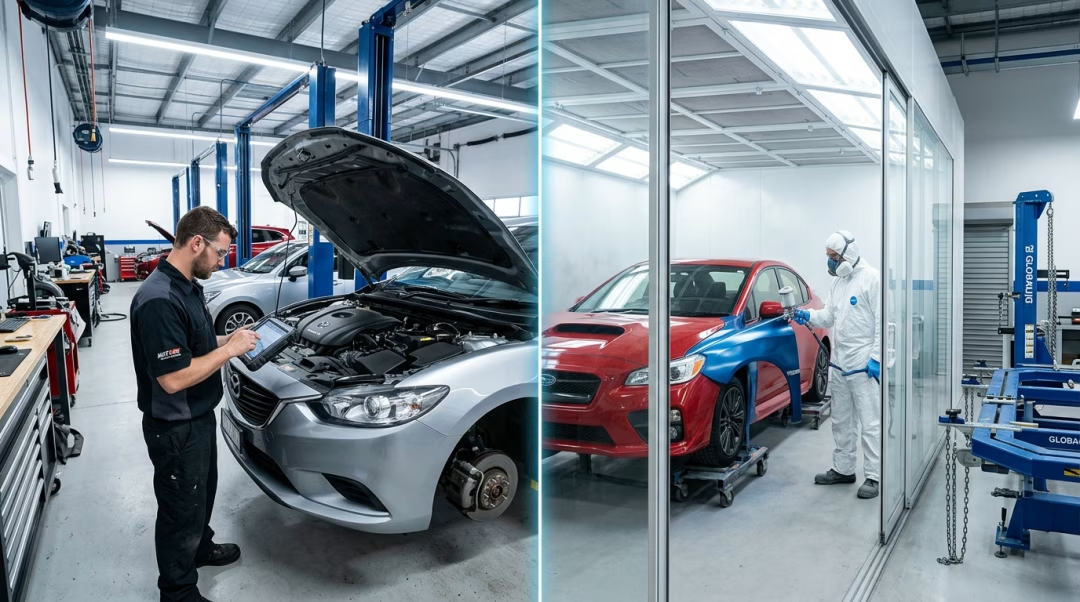
General auto repair is centered on the mechanical and electrical systems that make your vehicle go, stop, and operate comfortably. It is a world of diagnostics, preventative maintenance, and component replacement. Collision repair is a restorative science, focused on meticulously rebuilding the vehicle's body, frame, and safety systems after they have been compromised by an impact. Let's break down the key areas where these two vital services diverge.
The primary objective of a general auto repair shop is to maintain and restore your vehicle's operational performance. Technicians in this field are concerned with:
In contrast, a collision repair facility's mission is to restore a vehicle's structural integrity, cosmetic appearance, and factory-specified safety functions after an accident. Their focus includes:
The divergence in mission necessitates completely different sets of tools and training. A general mechanic's garage is filled with diagnostic scanners, vehicle lifts, engine hoists, and an array of wrenches and power tools designed to service mechanical components.
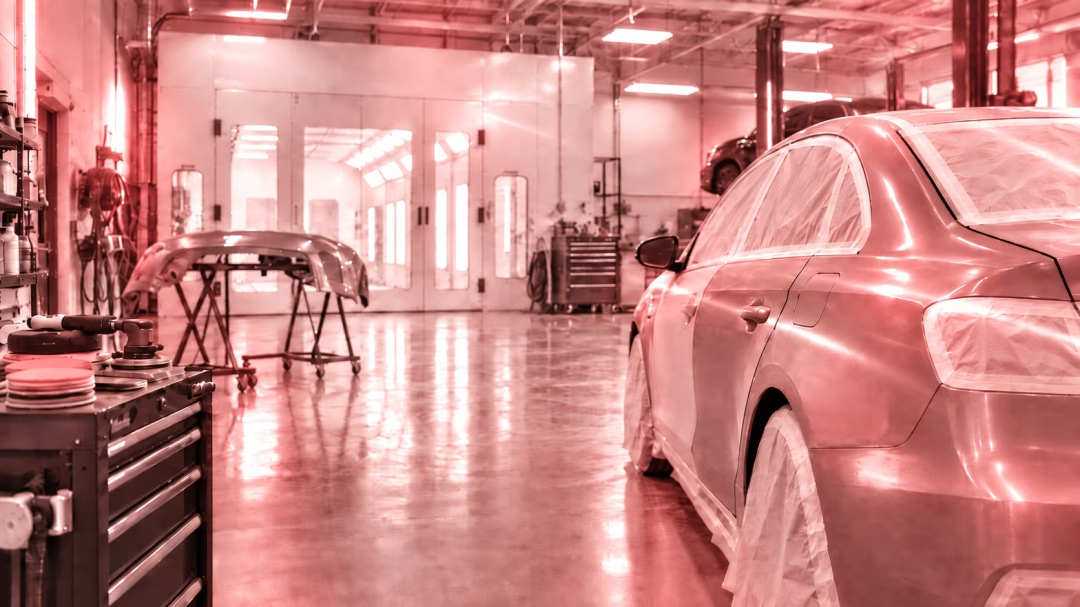
A collision repair shop looks vastly different. You will find highly specialized equipment, including:
The training is just as distinct. While general mechanics often pursue ASE (Automotive Service Excellence) certifications in areas like Engine Performance or Brakes, collision technicians seek I-CAR (Inter-Industry Conference on Auto Collision Repair) training. I-CAR provides ongoing education on the latest vehicle technologies, repair procedures for new materials, and safety system protocols, which is vital in an industry where vehicle construction changes rapidly.
When you bring your car to a mechanic for a strange noise, the process begins with diagnostics—often plugging a scanner into the OBD-II port, performing a test drive, and visually inspecting the engine bay. The repair involves replacing a specific, malfunctioning part.
In collision repair, the process starts with a thorough damage analysis. This is far more than a quick look; it often requires a partial disassembly of the vehicle to uncover what hidden damage looks like after a minor accident. A technician will measure the frame against factory blueprints and create a detailed repair plan. The repair itself is a multi-step process: structural repair first, then panel work, then extensive prep work for paint, followed by the refinishing process, and finally, reassembly and system recalibration.
Furthermore, collision repair almost always involves an insurance claim. Body shops are experts at navigating the complex world of insurance estimates, supplements for hidden damage, and documentation required by carriers. This is a skill set that general mechanics rarely need to develop. Understanding how the auto body insurance claims process works is a key part of the collision repair experience.
A significant collision can easily cause damage that requires expertise from both fields. A front-end impact might not only crush the bumper and fender but also damage the radiator, engine mounts, and suspension components. In these cases, a collision repair facility will perform all the structural and body work and then either have in-house mechanics or sublet the mechanical repairs to a trusted general repair shop. This collaboration ensures every aspect of the damage is addressed by the appropriate specialist, guaranteeing a complete and safe restoration of the vehicle.
Generally, no. While a mechanic might be able to replace a bolt-on part like a mirror or bumper cover, they lack the specialized equipment and training for structural repairs, panel alignment, and professional-grade paint refinishing. Attempting collision work without the proper skills can result in an unsafe and improper repair.
Collision repair involves more labor-intensive processes, highly specialized and expensive equipment (like frame machines and paint booths), and costly materials like automotive paint and clear coats. The goal is to restore both function and appearance, which is a more complex task than replacing a mechanical part.
Yes, absolutely. A reputable collision center will ensure that any related mechanical damage is addressed. A final wheel alignment is almost always necessary after frame or suspension work. The repair plan should include a thorough inspection of all systems potentially affected by the impact to ensure the vehicle is safe to drive.
Cosmetic repair addresses surface-level damage that does not affect the vehicle's safety or integrity, such as paint scratches, small dents, and scuffed bumpers. Structural repair involves correcting damage to the vehicle's underlying frame or unibody, which is essential for passenger safety, proper wheel alignment, and how the vehicle absorbs energy in a future crash.
If your car was involved in an impact of any kind—from a fender bender to a major accident—you need a collision repair specialist. If your car has a problem related to how it runs, stops, or operates (like a check engine light, strange noises, or poor performance), you need a general auto mechanic.