The moments after a car accident are often stressful and confusing. Once you have ensured everyone is safe and reported the incident, the next step involves navigating the insurance claim and repair process. A common point of uncertainty for many drivers is where to take their vehicle for repairs. Your insurance company will likely provide a list of "preferred" or "network" body shops, and their suggestion might sound like a requirement. However, it is crucial to understand that in most states, including Kentucky, you have the legal right to choose your own collision repair facility. This decision is more than a matter of preference; it directly influences the quality of the repair, the types of parts used, and the long-term safety and value of your vehicle. Empowering yourself with this knowledge allows you to select a shop based on trust and expertise, not an insurance company's business arrangement.
Exercising your right to choose a body shop means you are placing the integrity of your vehicle and the safety of your passengers first. An independent shop that you select works for you, not the insurance company. Their primary goal is to restore your car to its pre-accident condition using the correct procedures and parts. This ensures that critical safety systems are functioning properly and that the repair will stand the test of time, helping to protect your investment. Choosing a trusted expert is about securing peace of mind.
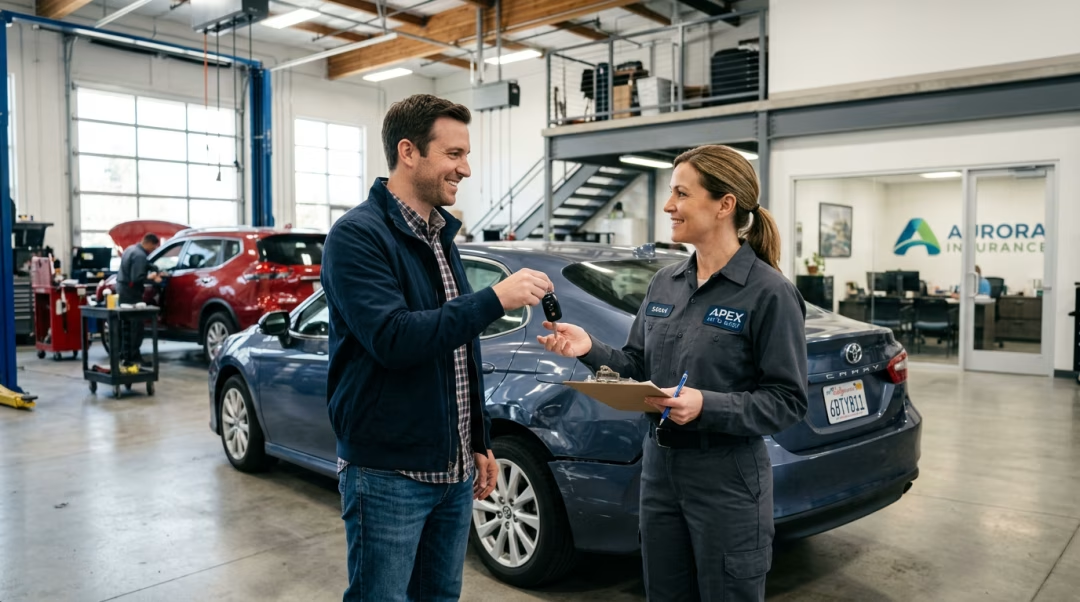
After a collision, one of the most important decisions you will make is selecting the body shop that will perform the repairs. While your insurance provider may attempt to steer you toward one of their network facilities, it is legally your choice. This "Right to Choose" is protected by consumer rights laws designed to prevent insurance companies from monopolizing the repair process. Insurers have established these networks, often called Direct Repair Programs (DRPs), to control costs. Shops in a DRP have agreements with the insurer that often dictate labor rates, repair procedures, and the types of parts used. While this can sometimes streamline the claims process, it can also create a conflict of interest where the shop's loyalty is split between satisfying the insurer's cost-saving goals and performing the best possible repair for you, the vehicle owner.
When you choose your own body shop, you put yourself back in control. You can select a facility based on its reputation, certifications, and commitment to quality, rather than its affiliation with an insurance company. This choice comes with several significant benefits that directly impact the outcome of your repair.
Some drivers worry that choosing a non-DRP shop will complicate or delay their claim. While it involves a few different steps, a reputable body shop is experienced in working with all insurance companies and can guide you through the process seamlessly. They will handle the negotiations and paperwork to ensure your vehicle is repaired correctly.
First, you should get a comprehensive collision repair estimate from the shop you have chosen. Your shop will then submit this estimate to the insurance company. The insurer will review it, and they may send their own adjuster to inspect the vehicle. It is common for the initial insurance estimate to be lower than the shop's. This is often because the insurer's estimate may not account for hidden damage that is only discovered once the vehicle is disassembled. Your chosen body shop will identify this supplemental damage and negotiate with the insurer to get the additional repairs approved. Once the final repair cost is approved, the shop completes the work. Before you drive away, a post-repair inspection is crucial to verify that everything has been restored to factory standards.
Be aware that some insurance representatives may use persuasive language to guide you to their preferred network. They might imply that if you go elsewhere, you will be responsible for additional costs, that they cannot guarantee the work, or that the process will take much longer. These are typically steering tactics. The repair shop, not the insurance company, provides the warranty on the repairs. As long as the shop's labor rates are within the "usual and customary" range for the area, the insurer is obligated to pay the full cost of the repair. A professional, independent shop is proficient at managing the claims process and will work diligently to avoid unnecessary delays.
No. In almost every state, it is illegal for an insurance company to require you to use a specific repair shop. This practice is known as "steering" and is prohibited by law. They can recommend shops from their network, but the final decision belongs to you, the policyholder and vehicle owner.
Not necessarily. While the initial steps might take an extra day for an adjuster's inspection, a professional independent shop is highly efficient at communicating with insurers, documenting damage, and negotiating supplements. Any minor delays are often offset by the assurance of a higher quality, more thorough repair.
This is a very common scenario. The initial insurance estimate is often just a starting point and may not account for hidden damage or the cost of OEM parts. Your chosen body shop will negotiate directly with the insurance company, providing documentation to justify the need for additional repairs and costs, ensuring your vehicle is restored correctly.
No. Your choice of a repair facility has no bearing on your insurance premium. Premiums are determined by your policy, driving record, and the nature of the claim itself (such as being at-fault in an accident), not by which reputable shop performs the work.
OEM stands for Original Equipment Manufacturer. These are new parts made by your vehicle's original manufacturer. They are identical to the parts your car was built with, ensuring a perfect fit, maintaining structural integrity, and guaranteeing that safety systems function as designed. Aftermarket parts are copies made by third-party companies and may not meet the same quality or safety standards.