The weather can be your vehicle's worst enemy, leaving behind a trail of cosmetic and sometimes structural damage. From the unmistakable dimples of a hailstorm to the slow, creeping corrosion caused by winter road salt, nature's elements can significantly impact your car's appearance and value. Understanding how this damage is professionally repaired is the first step toward restoring your vehicle to its former glory. The repair process is a sophisticated blend of art and science, involving specialized tools, precise techniques, and an expert understanding of automotive finishes. Whether dealing with minor scratches from windblown debris or significant dents, a proper repair not only fixes the visible issue but also protects the underlying metal from future problems like rust. Knowing what to expect from a professional body shop can give you peace of mind and ensure you receive the highest quality of work, preserving your investment for years to come.
Navigating the aftermath of weather damage can feel overwhelming, but modern auto body technology offers incredible solutions. Repair methods vary widely depending on the type and severity of the damage. For instance, skilled technicians often use Paintless Dent Repair (PDR) to meticulously massage out hail dents without affecting the factory paint. For sun-faded or oxidized paint, a multi-stage paint correction process can rejuvenate the finish. When damage is more severe, it may require sanding, priming, and expert color matching to seamlessly blend the repair.
Weather-related vehicle damage comes in many forms, each requiring a specific approach for a flawless restoration. Professional auto body shops are equipped with the knowledge and tools to tackle everything from hail and sun to wind and water damage. The goal is always to return the vehicle to its pre-damaged condition, ensuring both its aesthetic appeal and structural integrity are fully restored. Let's explore the most common types of weather damage and the detailed processes used to repair them.
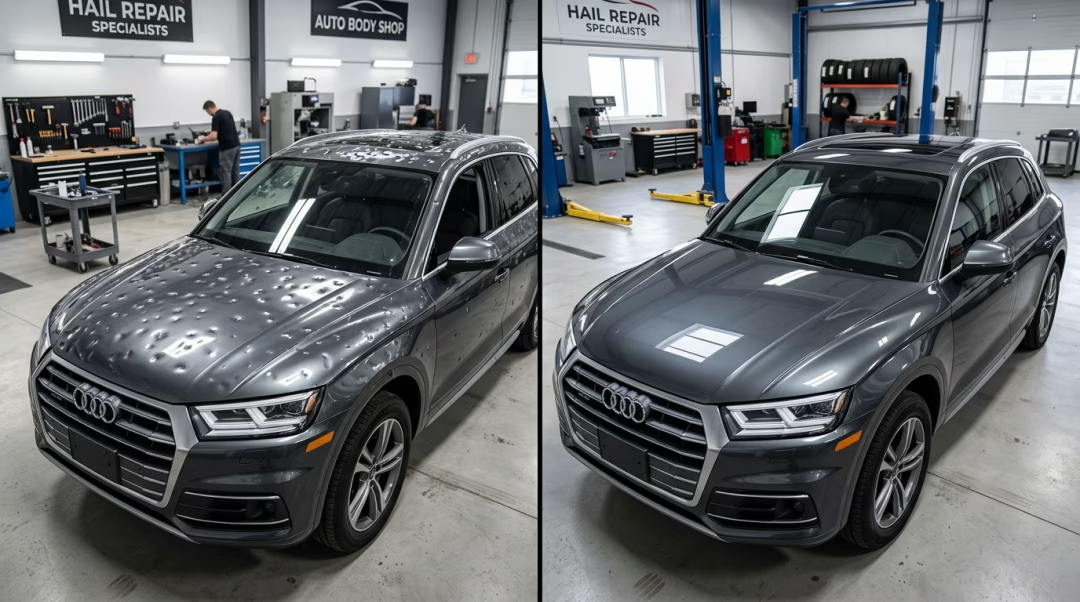
Hail is notorious for causing widespread, crater-like dents across a vehicle's horizontal panels, such as the roof, hood, and trunk lid. The primary and most preferred method for fixing this is Paintless Dent Repair (PDR). This technique is ideal when the paint has not been cracked or chipped.
When hail is very large or the impact has cracked the paint, PDR is not an option. In these cases, conventional body repair is necessary. This involves sanding the damaged area down to the metal, applying body filler to smooth the surface, priming the area, and then using advanced color-matching technology to repaint the panel for a seamless blend.
Constant exposure to the sun's ultraviolet (UV) rays can be brutal on your car's paint. It breaks down the clear coat, leading to a dull, faded, or chalky appearance known as oxidation. If left untreated, this can eventually lead to complete paint failure.
For minor to moderate oxidation, a process called paint correction can work wonders. This involves several steps:
In severe cases where the clear coat has failed and peeled, or the color coat is damaged, paint correction is not enough. The affected panel will need to be sanded, primed, and completely repainted.
While flood damage affects a vehicle's interior and electronics, prolonged exposure to moisture from rain, snow, and humidity can cause significant body issues, primarily rust. Scratches and chips from other sources create weak points where water can penetrate the paint and reach the bare metal, initiating the corrosion process. This is especially true in regions where winter road salt is used.
Repairing rust is a non-negotiable part of vehicle maintenance to prevent it from spreading. The process for surface rust includes grinding or sandblasting the corrosion away until clean, bare metal is exposed. A rust-inhibiting primer is then applied, followed by standard priming, painting, and clear coating. For more severe rust that has created holes in a panel, the affected section may need to be cut out and a new metal patch welded in place before the finishing process can begin.
High winds can turn small branches, pebbles, and other debris into projectiles that can scratch, chip, and dent your vehicle. The repair method depends entirely on the depth and size of the damage.
No matter the cause, addressing weather-related body damage promptly and professionally is key to maintaining your vehicle's safety, appearance, and resale value. If you have experienced damage, it is best to consult with a reputable shop to explore your options. Our dedicated vehicle service team can provide expert assessments and transparent estimates to get you started.
Not always. PDR is highly effective for dents where the paint is intact. However, if the hail was large enough to crack the paint or severely stretch the metal, conventional repair methods involving sanding, filling, and repainting will be necessary to achieve a proper and lasting repair.
The timeline varies based on severity. A multi-stage paint correction for minor to moderate oxidation can typically be completed in one to three days. If the damage requires a full repaint of one or more panels, the process could take several days to a week to allow for proper curing time between paint stages.
Generally, rust that forms over time due to normal weather exposure and lack of maintenance is not covered by standard auto insurance policies. However, if rust is the direct result of a covered event, such as damage from a hail storm that chipped the paint and was not repaired, the subsequent rust repair might be included as part of the original claim.
Professional body shops use a vehicle's factory paint code, usually found on a sticker in the door jamb or engine bay. They then use a computerized paint-mixing system to replicate the formula precisely. Technicians may also perform spray-out test cards and use a technique called blending to ensure a seamless transition between the new and old paint.
While you cannot control the weather, you can take preventive steps. Parking in a garage or under a carport is the best defense. Regularly washing and waxing your vehicle provides a protective layer against UV rays, acid rain, and road salt. Applying a ceramic coating or paint protection film (PPF) offers an even higher level of long-term protection against the elements.