Achieving a flawless, durable paint finish after a repair involves more than just skillful application. The most critical phase is the curing process, where the paint transforms from a liquid coat into a hard, protective shell. This is a sensitive chemical reaction heavily influenced by the surrounding environment. Weather conditions, specifically temperature, humidity, and direct sunlight, play a pivotal role in determining the final quality and longevity of your vehicle's new paint. An environment that is too hot, too cold, or too damp can compromise the entire job, leading to imperfections like solvent pop, blushing, or a weak bond. Understanding how these factors impact the curing process is essential for appreciating the controlled techniques used by professional body shops and for knowing how to properly care for your vehicle after you bring it home. A perfect cure ensures your paint job not only looks brilliant but also stands up to the elements for years to come.
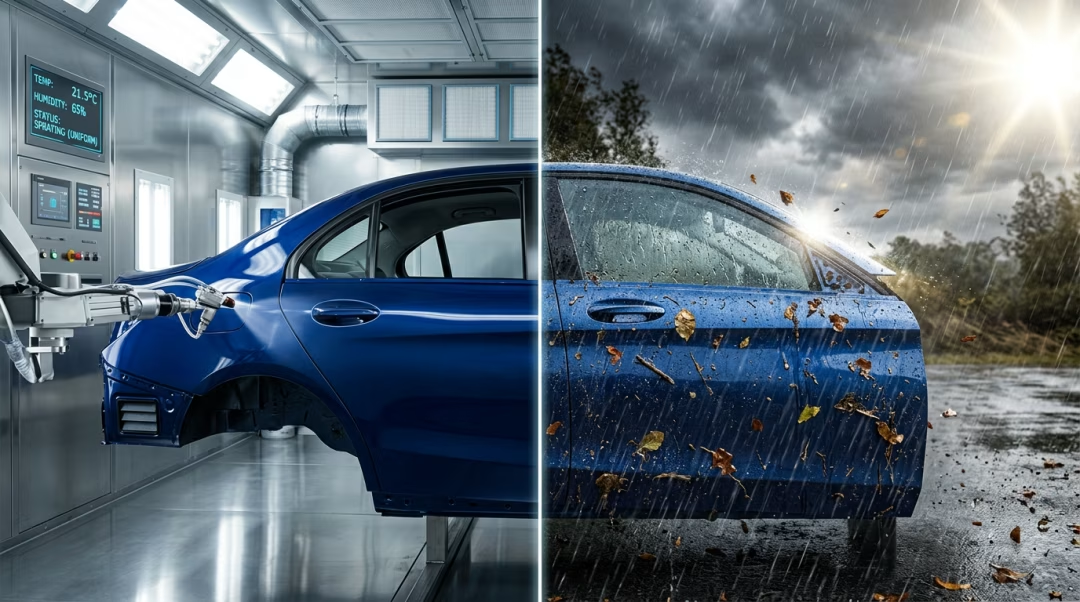
Professional collision repair centers do not leave this critical process to chance. By utilizing climate-controlled spray booths, technicians create the perfect environment for paint to cure, free from the unpredictable nature of outside weather. These specialized booths regulate temperature and humidity while ensuring a dust-free space, guaranteeing a consistent, factory-quality finish. This attention to detail is why it is also crucial for vehicle owners to follow specific aftercare instructions, protecting the paint as it completes its final, extended curing phase out in the real world.
When your vehicle receives a new coat of paint, the process has only just begun. The terms "drying" and "curing" are often used interchangeably, but they describe two very different stages. Drying is simply the evaporation of solvents, leaving the paint feeling dry to the touch. Curing, however, is a much more complex chemical process. During curing, polymer chains within the paint cross-link with one another, forming a strong, resilient, and unified layer. This process is what gives automotive paint its hardness, gloss, and resistance to chemicals and UV radiation. For this to happen correctly, the environmental conditions must be within a very specific range.
Temperature is arguably the most significant environmental factor affecting how auto paint cures. Modern automotive paints are designed to cure optimally within a specific temperature window, typically between 60 and 90 degrees Fahrenheit. Deviating from this range can cause significant problems.
Humidity, or the amount of moisture in the air, is another variable that must be carefully managed. Water vapor can interfere with the chemistry of the paint, especially the clear coat that provides the final layer of protection and gloss.
When humidity is too high, moisture can become trapped in the wet paint film. This often leads to a cloudy or milky appearance called "blushing." The excessive moisture disrupts the solvent evaporation rate and can interfere with the cross-linking process, resulting in reduced gloss and a softer final finish. High humidity can significantly extend the necessary curing time, keeping the vehicle in the shop longer and leaving the new paint susceptible to airborne contaminants for a greater period.
Low humidity can also present challenges. In very dry conditions, the paint can dry too fast on the surface, which, much like high heat, can lead to poor flow and leveling, potentially affecting the overall smoothness and sheen of the final paint job.
While your car’s paint is designed to withstand the sun, a fresh paint job is highly vulnerable. Exposing newly applied paint to direct, intense sunlight is like force-baking it in an uncontrolled oven. The intense UV radiation and heat can accelerate the surface curing far too quickly, leading to the same issues as high-temperature environments. More importantly, the clear coat needs time to fully harden to develop its UV-blocking capabilities. Premature exposure can weaken this protective layer from the start, making it more susceptible to the long-term effects that cause paint to fade or oxidize over time.
To eliminate the guesswork and variables of ambient weather, professional vehicle service centers and body shops use downdraft paint booths. These are not just clean rooms; they are sophisticated pieces of equipment that create the ideal curing microclimate. They control air temperature, manage humidity levels, and use complex filter systems to remove over 99% of airborne particles. After the paint is applied, the booth can enter a "bake cycle," where the temperature is raised to a precise, controlled level to accelerate the curing process safely and effectively. This technology ensures that every vehicle receives a perfect, durable finish, no matter if it is a humid summer day or a frigid winter afternoon.
Even after being cured in a professional paint booth, automotive paint continues to harden for weeks or even months. The initial cure at the shop makes it durable enough for you to drive, but the "full cure" happens over time. This is why following post-repair care instructions is so important. For detailed guidance, learn more about how to care for a fresh paint job after repair. Protecting your vehicle from harsh conditions during this final phase is key to preserving its new finish. Avoid automatic car washes with harsh brushes, do not apply wax or sealants, and try to park out of direct sunlight whenever possible. Taking these simple steps ensures the investment in your vehicle's appearance lasts for years.
While a new paint job may feel dry to the touch within hours, the full curing process, where all solvents have evaporated and the paint has reached maximum hardness, can take anywhere from 30 to 90 days. This timeframe is heavily influenced by the type of paint used and the environmental conditions it is exposed to after leaving the body shop.
You should wait before washing your vehicle. Most body shops recommend waiting at least one to two weeks before the first wash. When you do wash it, do it by hand using a gentle, pH-neutral car soap and a soft microfiber mitt. Avoid high-pressure washers and harsh automatic car washes during the first month.
If the paint is already touch-dry from the shop's bake cycle, rain itself is not a catastrophe. However, rainwater can contain pollutants and minerals that may leave water spots on the soft, curing paint. It is best to gently dry the vehicle with a clean microfiber towel once the rain stops. The real danger is heavy rain on paint that has only been applied within the last few hours and has not yet set.
A slightly soft feel can be normal in the days following a repaint as it is still in the curing process. However, if it feels noticeably tacky or soft after a week, it could indicate that the paint has not cured properly. This might be due to trapped solvents from improper temperature or humidity during application, and you should contact the repair shop that performed the work.
No, you should avoid using a car cover for at least 30 days. A car cover can trap moisture and solvents that are still trying to escape from the paint, which can ruin the finish. The cover itself can also cause scuffs and scratches on the paint while it is still relatively soft and has not achieved its full hardness.