Have you ever returned to your car in a parking lot to find a frustrating new ding or dent? Before you assume a costly and time-consuming body shop visit is in your future, it is important to understand a revolutionary alternative: Paintless Dent Repair (PDR). This innovative technique is a highly skilled method for removing minor dents and dings from a vehicle’s body panels without disturbing the original factory paint. By using specialized tools to carefully massage the metal back into its original form from behind the panel, technicians can completely erase damage. This process not only preserves your vehicle’s factory finish, which is crucial for maintaining its resale value, but it is also significantly faster and more affordable than traditional repair methods. PDR is the ideal solution for repairing everything from annoying door dings to widespread hail damage, keeping your car looking its best without the need for fillers, sanding, or repainting.
The key to a successful Paintless Dent Repair lies in the integrity of your vehicle's paint. As long as the paint is not cracked, chipped, or broken, PDR is often the superior choice. It is the preferred method for addressing the shallow dents caused by shopping carts, hail storms, or minor bumps. Our expert technicians have the precision and experience to assess the damage and determine if your vehicle is a suitable candidate for this value-preserving technique. Explore our vehicle service options to learn more about how we care for every car.
Paintless Dent Repair, often abbreviated as PDR, is more of an art form than a simple mechanical process. It stands in stark contrast to conventional auto body repairs that have been the standard for decades. Traditional methods involve a multi-step process: grinding down the original paint, hammering the damaged metal close to its original shape, applying body filler to smooth the surface, sanding, priming, and finally, repainting the affected area. While effective, this approach is invasive, time-consuming, and forever alters the vehicle's original factory finish. A technician must know how auto paint color matching technology works to ensure a seamless result.
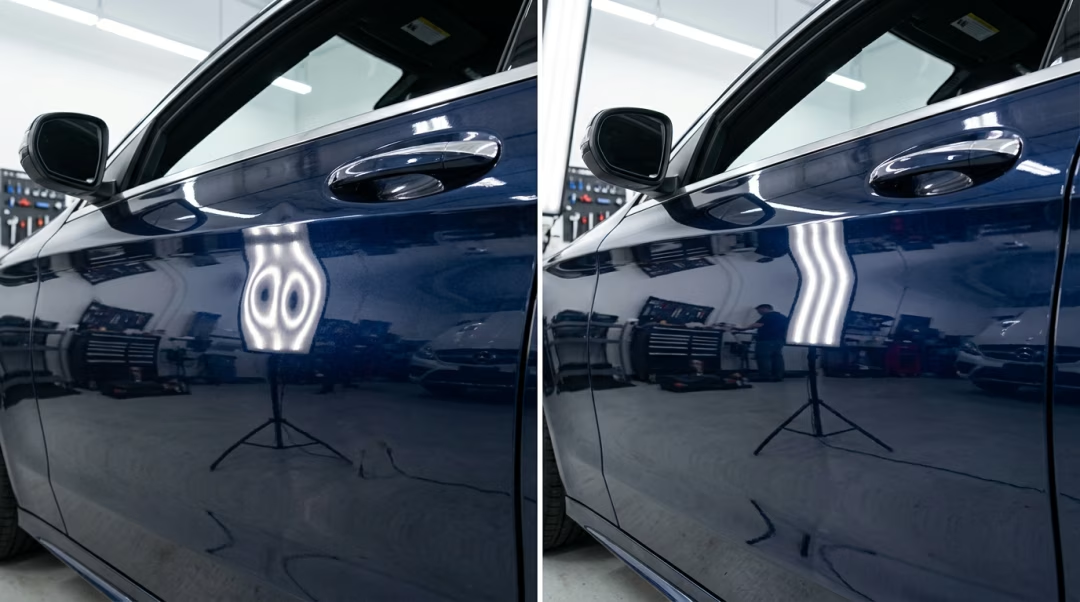
PDR, on the other hand, is a masterpiece of precision and finesse. The entire philosophy is built around preservation. A skilled PDR technician uses a collection of specialized tools, including metal rods and picks of various shapes and sizes, to gain access to the underside of the damaged panel. By applying slow, deliberate pressure to specific points, they meticulously massage the metal, gradually pushing it back to its pre-damaged state. This process requires an intimate understanding of metal memory, leverage, and an incredibly steady hand. Technicians often use special LED or fluorescent lighting boards to cast a reflection on the panel, which highlights the topography of the dent and allows them to see exactly where to apply pressure for a flawless repair.
The effectiveness of PDR is entirely dependent on the nature of the damage. Understanding the ideal scenarios for this technique helps set realistic expectations and ensures you choose the right repair for your vehicle. PDR is not a universal fix for all body damage, but for the right kind of imperfections, it is undeniably the best option available.
Just as it's important to know when PDR is suitable, it's equally crucial to recognize its limitations. Attempting PDR on unsuitable damage can lead to a poor repair or even make the problem worse. In these instances, traditional collision repair methods are necessary.
Choosing Paintless Dent Repair when your vehicle qualifies offers a host of benefits that go far beyond just aesthetics. It is a smarter, more efficient way to maintain your car's condition and value. By preserving the original paint, you are also protecting its resale value. A factory paint job is more durable and of higher quality than nearly any aftermarket repaint. A vehicle with its original paint intact is always more desirable to prospective buyers. Furthermore, because PDR avoids the use of body fillers, paints, and chemical solvents, it is a much more environmentally friendly process, producing no harmful VOCs (Volatile Organic Compounds). Finally, the time savings are significant. While a traditional repair can take several days or even a week, most PDR jobs are completed within a few hours, getting you back on the road faster. For more information about our team and our commitment to quality, please visit our about us page.
The cost of PDR varies depending on the size, depth, and location of the dent. However, it is almost always significantly less expensive than traditional body repair, often costing 50-75% less because it requires no materials like paint or filler and involves less labor time.
No. Once the metal has been properly manipulated back to its original position, the repair is permanent. The dent will not "pop" back out on its own. The metal's structural integrity is restored, and it will hold its shape indefinitely.
Generally, no. PDR is designed for metal panels like steel and aluminum, which have "memory" and can be massaged back into shape. Plastic bumpers are more flexible and often require different techniques, such as heat reshaping or specialized fillers, for repair. To learn more, read about how auto body shops repair plastic bumper cracks.
Yes, PDR can be performed on aluminum panels, but it requires a technician with specific training and experience. Aluminum is lighter and stronger than steel but has less memory and is more prone to cracking if not handled correctly. It is a more challenging and time-consuming process than working with steel.
Typically, no. Because PDR does not involve repainting or major component replacement, and is often paid for out-of-pocket rather than through an insurance claim, it is not usually reported to services like CarFax or AutoCheck. This is another major benefit for preserving your vehicle's clean history and resale value.
The best way is to have it professionally assessed. However, a good self-check is to look closely at the center of the dent. If you see any cracks, chips, or missing paint, it is likely not a candidate. If the paint looks completely smooth and intact, there is a very good chance PDR will be a successful repair option for you.